
Click any gallery picture below to open the image viewer
Galaxies

M31 Andromeda Galaxy

M81 Bode's Galaxy & M82 Cigar Galaxy

M51 Whirlpool Galaxy

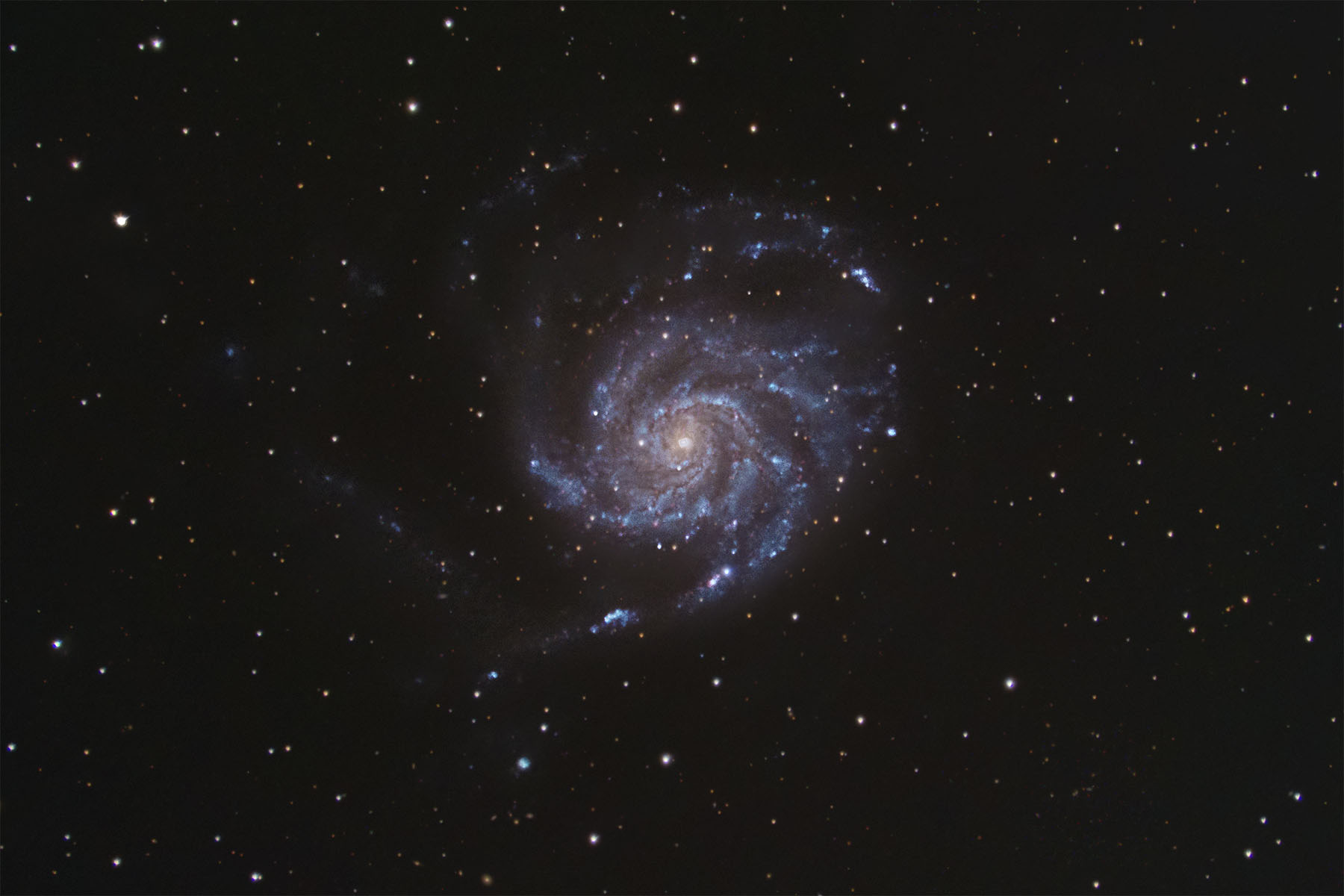
M101 Pinwheel Galaxy
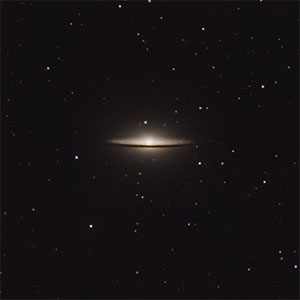
M104 Sombrero Galaxy
Nebulae
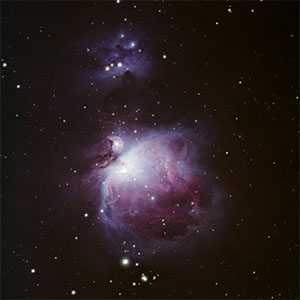
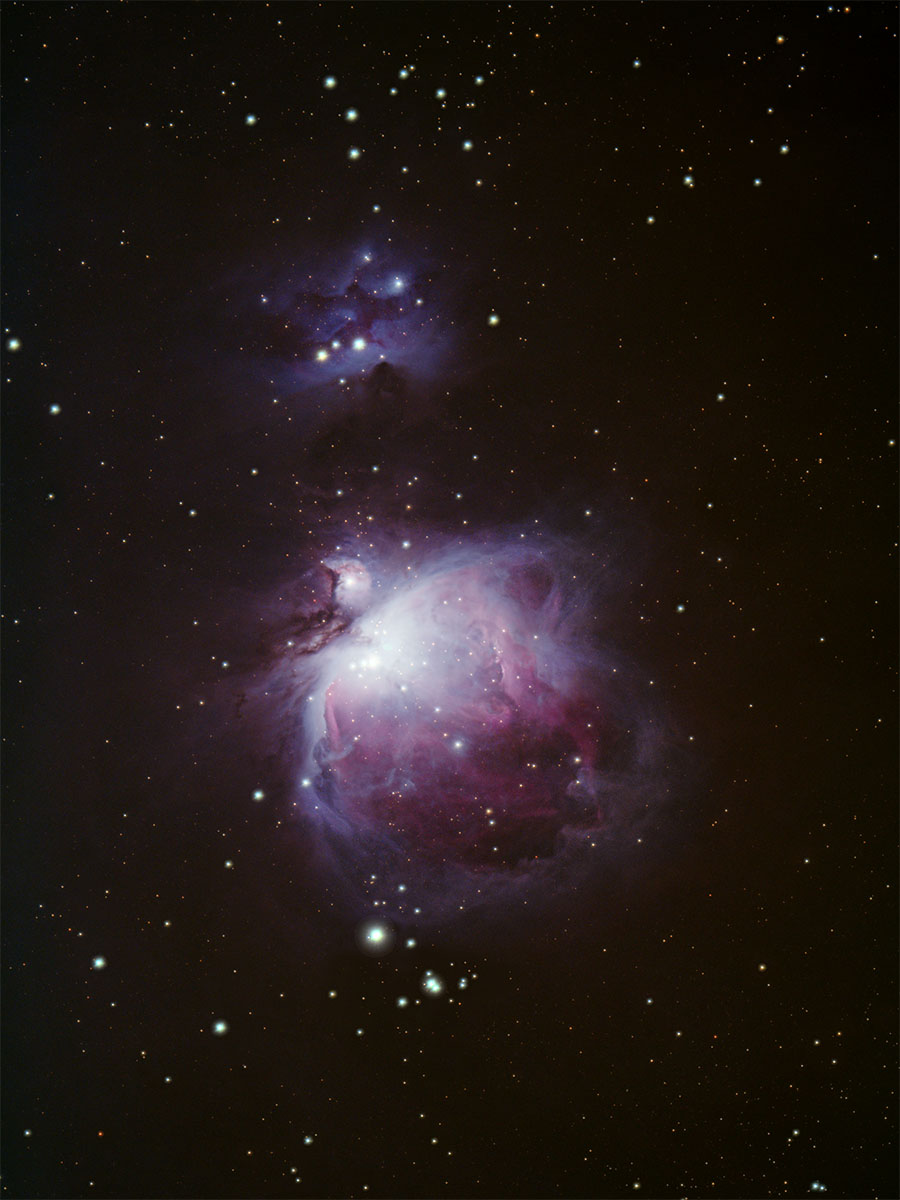
M42 Orion Nebula
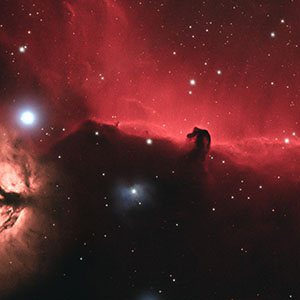
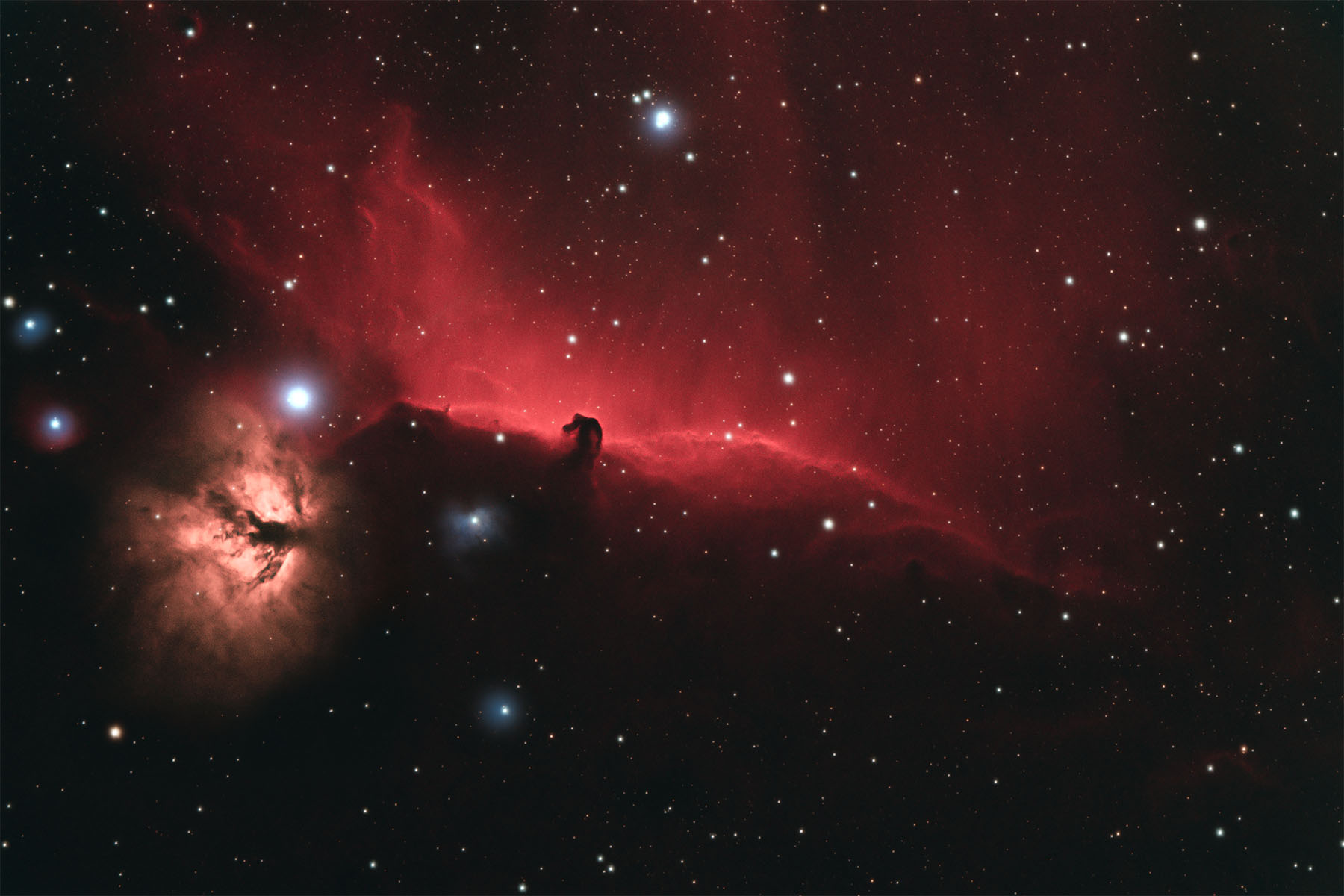
B33 Horsehead & NGC2024 Flame Nebulae
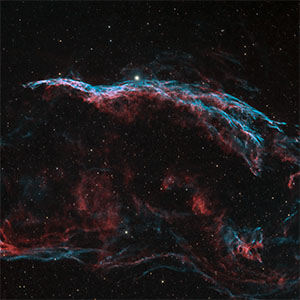
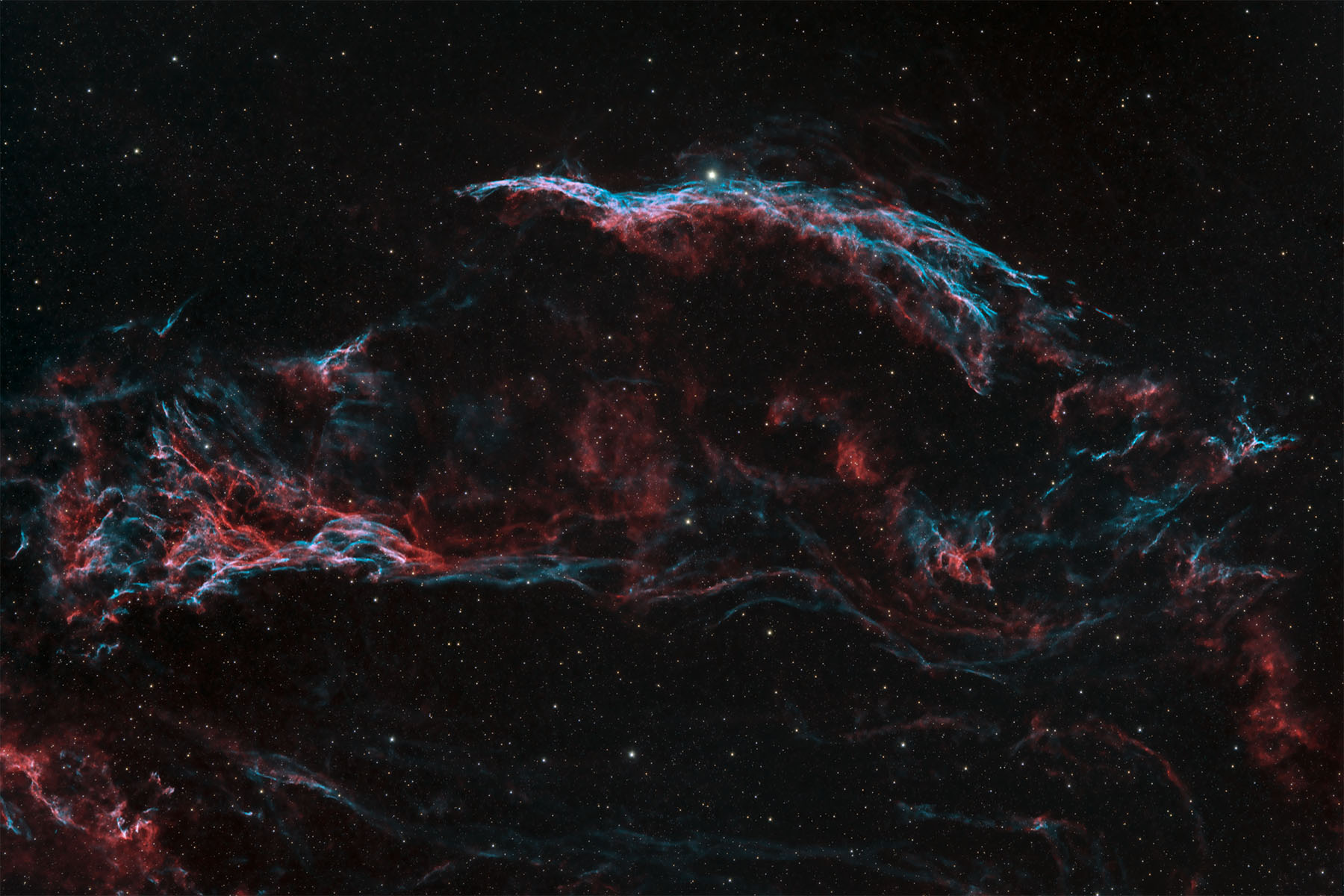
NGC6960 Western Veil Nebula (Witch's Broom)
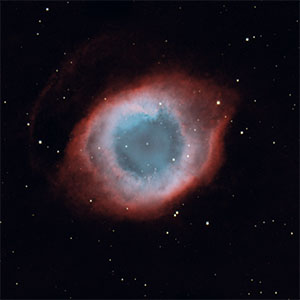
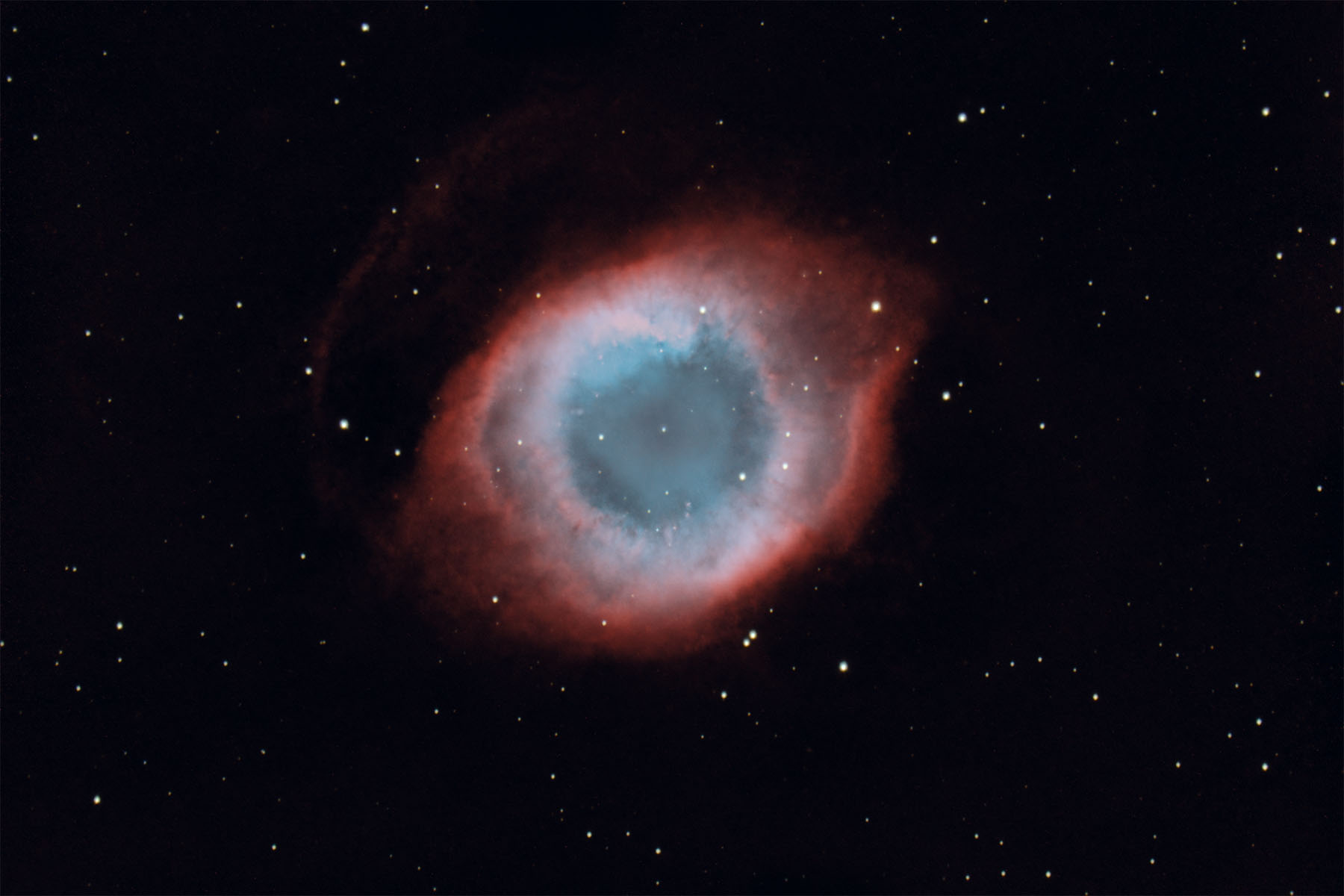
NGC7293 Helix Nebula (Eye of God)
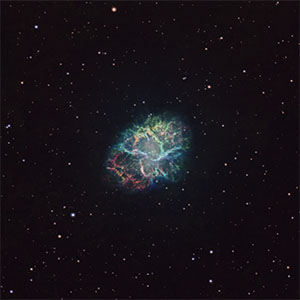
M1 Crab Nebula

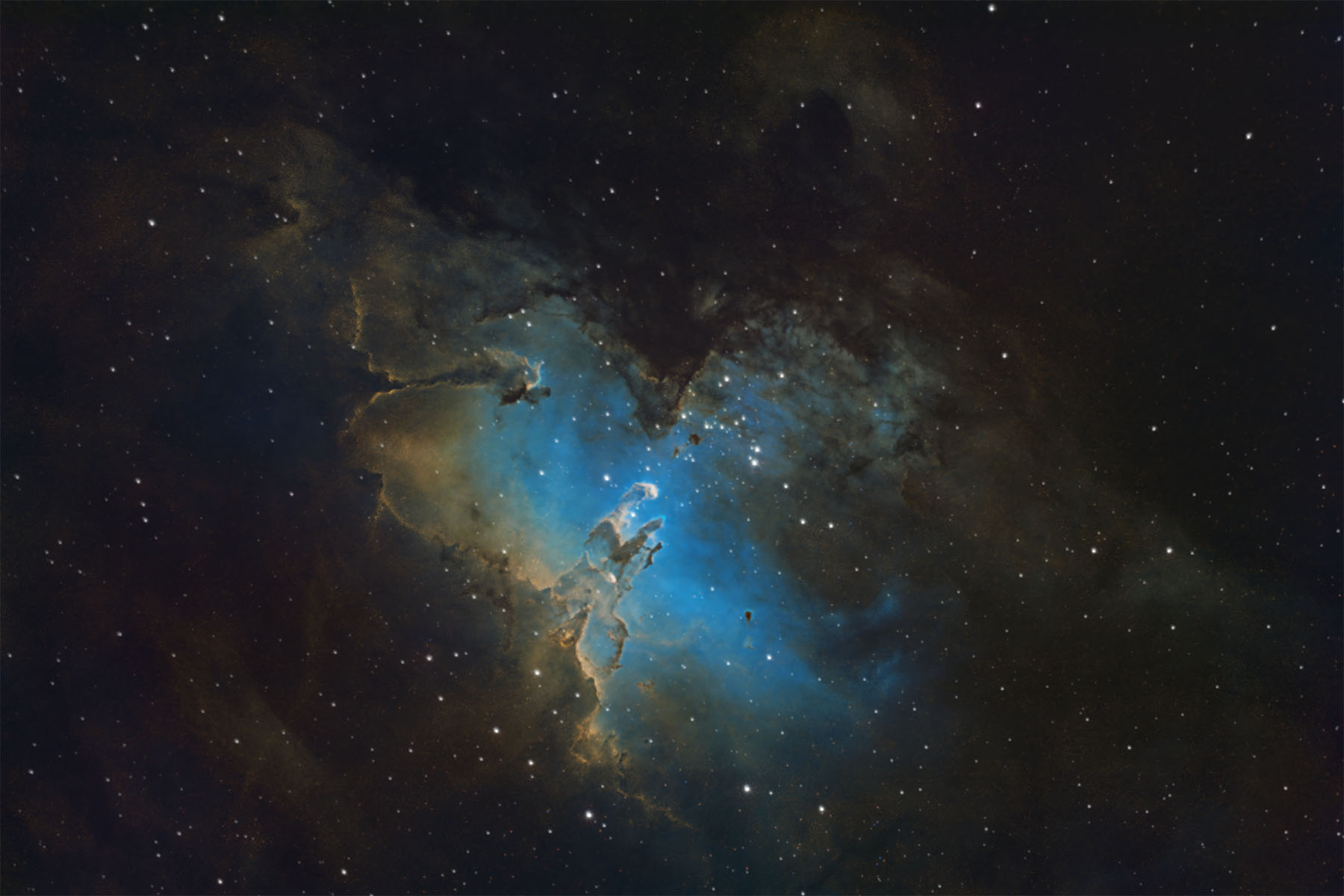
M16 Eagle Nebula (in Hubble palette)

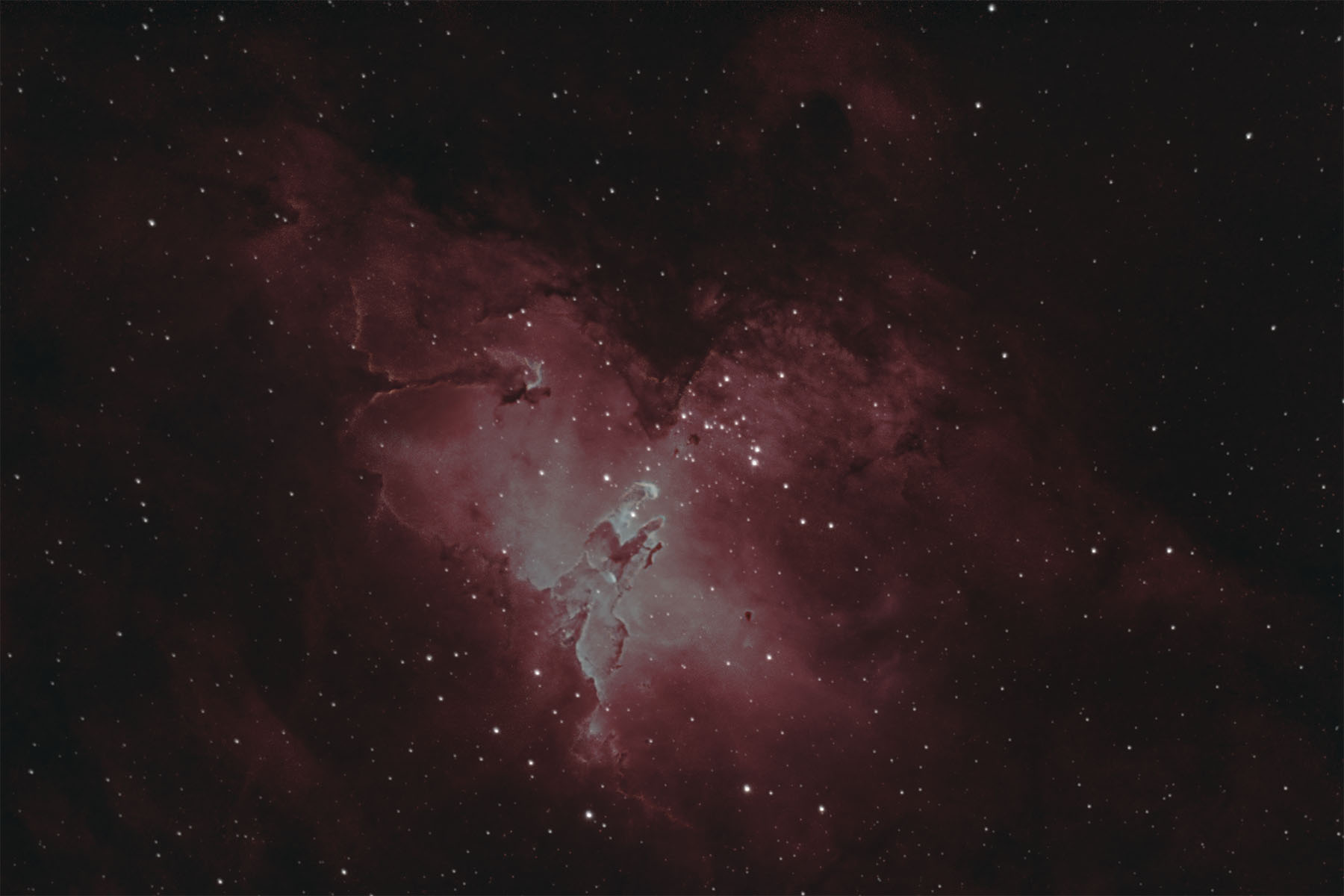
M16 Eagle Nebula (in natural colours)

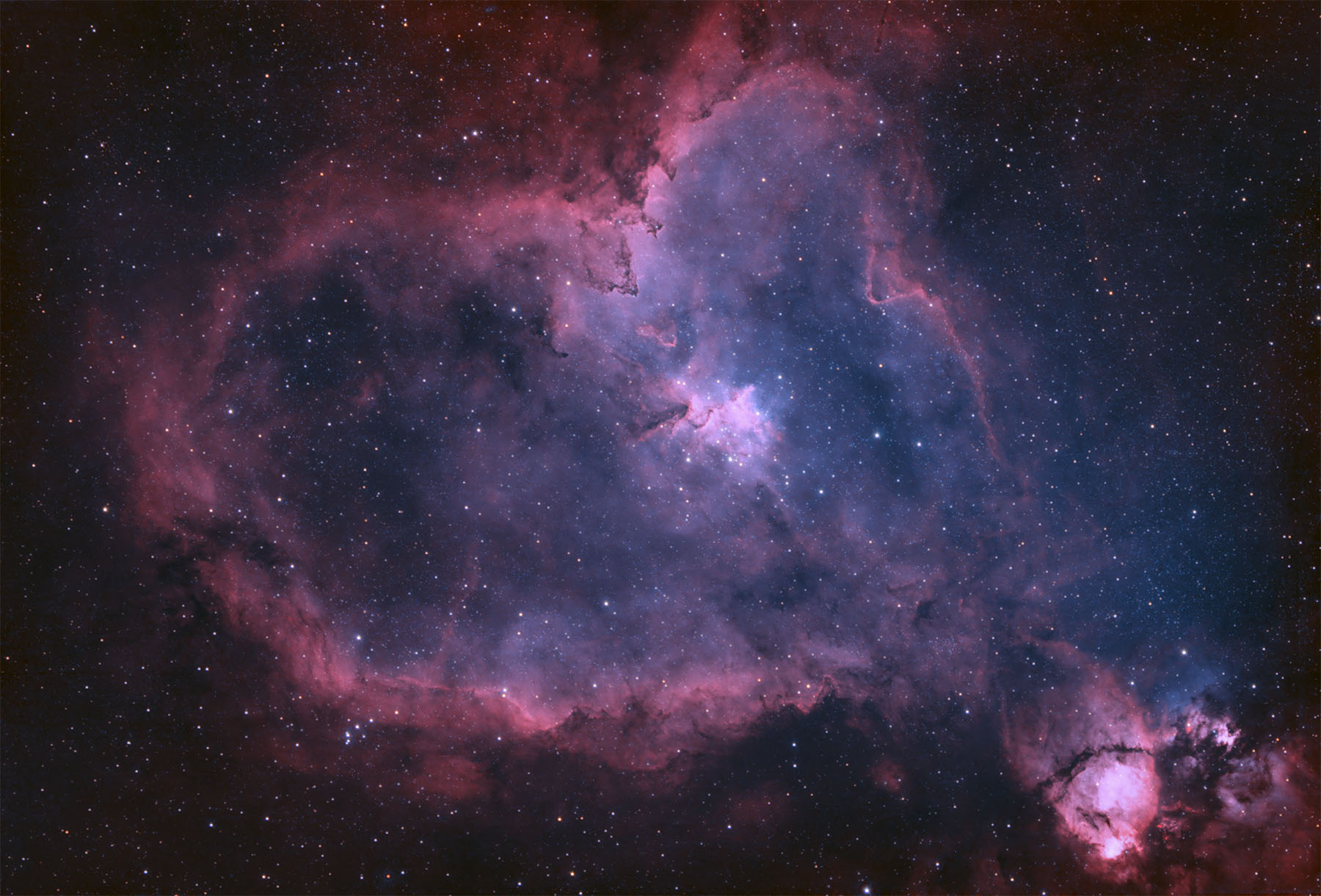
IC1805 Heart Nebula
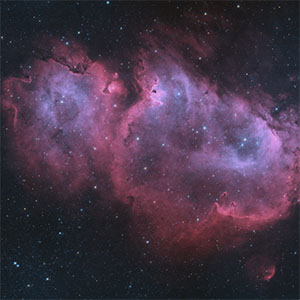
IC1848 Soul Nebula
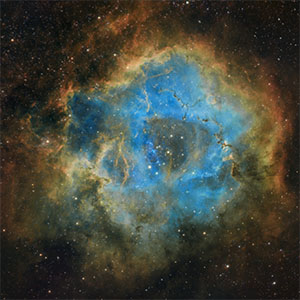
NGC2237 Rosette Nebula
Star Clusters

M13 Hercules Globular Cluster
Solar System Objects

Saturn
Jupiter and Io
Jupiter with Great Red Spot
Uranus
Mars
Neptune and Triton
Other
Jupiter rising behind the aurora
Milky Way from Bignor Hill

Milky Way from Bignor Hill (crop)







Click the × (top right) to close image viewer and return to Home screen
Click main image to toggle between normal and maximum size
M31 Andromeda Galaxy
Date: 7/2/23
Subframes: 173 x 30s
Total: 87 minutes
The Andromeda Galaxy is a barred spiral galaxy like the Milky Way but is more than twice the size at around 220,000 light years in diameter and contains about 1 trillion stars. It is the nearest spiral galaxy to our own at a distance of 2.5 million light years and is moving towards us at approx.100km/s.
The diameter of Andromeda in this image represents about 2° 'width' in the sky from tip to tip. In fact, if we could see the whole thing, it would be nearer 3°. For comparison, the angular width of the moon is about 0.5°, so what is visible in this image is at least 4 times wider than the moon. It is amazing to imagine just what it would look like if it could be seen properly with the naked eye.
Also, very close and just to the left in the image is the M32 dwarf elliptical galaxy. It has almost certainly been captured by the gravity of Andromeda and appears to have travelled through it, losing material in the process, whilst creating a hole and warping the disc of its captor.
On the other side is the cigar-shaped M110 galaxy, though it is technically known as a dwarf spheroidal galaxy and is around 16,000 light years across.
M81 Bode's Galaxy & M82 Cigar Galaxy
Date: 3/4/23
Subframes: 125 x 30s
Total: 63 minutes
Bode's Galaxy in the middle of the image is a spiral galaxy about 12 million light years away in the constellation Ursa Major and is 96,000 light years in diameter. It has around 250 billion stars and its active galactic nucleus harbours a supermassive black hole 70 million times the mass of the sun.
The Cigar Galaxy below it is also 12 million light years away and is 41,000 light years in diameter, containing approximately 30 billion stars. This is known as a starburst galaxy, meaning it has an exceptionally high rate of star formation, which may have been triggered by its interaction with Bode's Galaxy.
The small fuzzy 'blob' to the right of Bode's Galaxy is NGC3077, a dwarf elliptical galaxy.
M51 Whirlpool Galaxy
Date: 24/5/23
Subframes: 55 x 80s
Total: 73 minutes
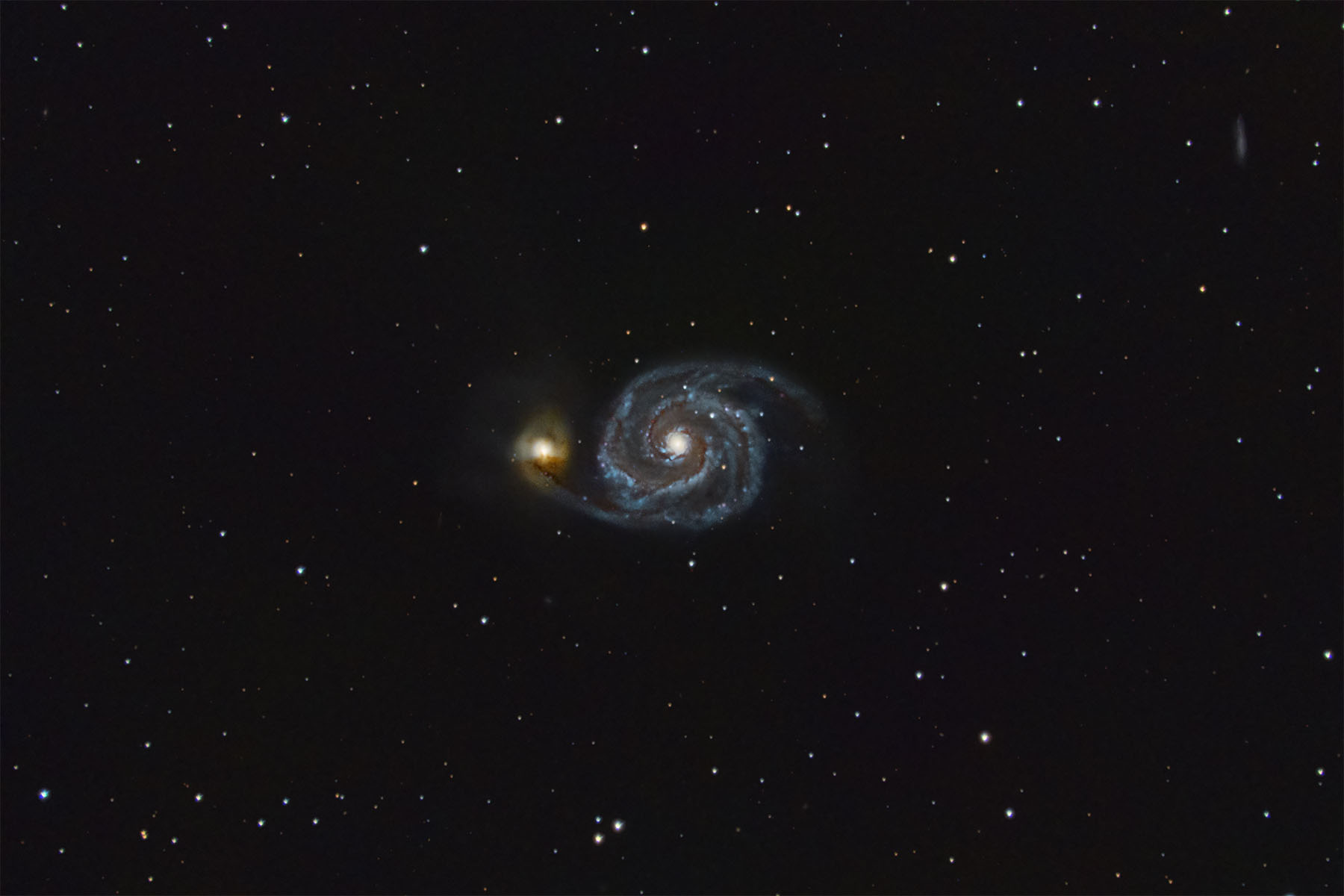
The Whirlpool spiral galaxy is 77,000 light years in diameter with an estimated 100 billion stars. At a distance of somewhere between 23 and 31 million light years,
it is considerably beyond the Local group
(the Milky Way and Andromeda galaxies and their smaller satellite galaxies).
Behind the end of one of its spiral arms is its dwarf companion galaxy NGC 5195, and the two are interacting, with the smaller visibly tugging on the larger via a tidal effect.
M101 Pinwheel Galaxy
Date: 25/5/23
Subframes: 116 x 62s
Total: 120 minutes
The Pinwheel Galaxy lies 21 million light years away in the constellation Ursa Major. It is 169,000 light years across (almost exactly double the Milky Way) and contains around 1 trillion stars.
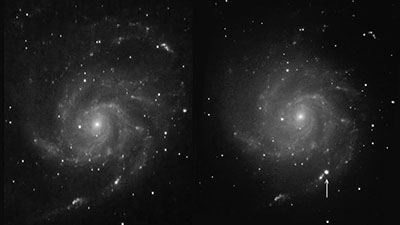
What is particularly interesting is the 'new' bright star in the lower spiral arm. This was spotted by amateur astronomer Koichi Itagaki on 19th May, 6 days before the image was taken (see before and after reference images below). The bright blob is a Type II supernova, now designated SN2023ixf. As we know the distance, we also know this supernova occurred 21 million years ago.
Type 2 supernovae are caused when massive stars (between 8 and 50 times the mass of the sun) reach the end of their life. All stars turn hydrogen into helium by nuclear fusion, and the energy creates outward pressure that counteracts gravity, keeping the star stable. Small stars do not get much past helium production, and a little carbon and oxygen, but more massive stars continue to produce heavier elements in the periodic table, all the way up to iron, though they have considerably shorter lives. Each element takes more energy than the previous one, so each step is shorter than the last. But when iron is produced, this absorbs all the remaining energy. With no outward pressure the core starts to collapse, increasing the rate of iron fusion, reducing pressure further, and causing a chain reaction. Then finally, the core implodes at approximately ¼ the speed of light, increasing temperatures to 100 billion Kelvin such that highly energetic particles are created. The shockwave rebounds outward with such force that the outer layers of the star are blown apart, lighting up the cosmos with the light of 1 billion suns. This light then declines and typically disappears after a few years. What remains would then either be a neutron star (with huge mass and density but about 20km in diameter), or if it had been massive enough, a black hole.
M104 Sombrero Galaxy
Date: 6, 28 & 29/4/25
Subframes: 92 x 135s
Total: 207 minutes
Approximately 30 million light years away in the constellation Virgo, the Sombrero Galaxy is very distinctive.
As we are viewing it almost edge-on, its structure is largely hidden to us. If it is a spiral galaxy, then the arms are most likely very tightly wound, and it does not have a central bar like the Milky Way. It appears very flat, which could be due to the conservation of angular momentum as it formed, and it has an estimated diameter of up to around 100,000 light years. Other features include a particularly large and bright central bulge, and a dark dust lane that encircles its outer edge, blocking out some of the light from the centre.
M42 Orion Nebula
Date: 2/3/23
Subframes: 165 x 30s
Total: 83 minutes
The Orion Nebula is a region of star formation and probably the closest such region to Earth at about 1350 light years. Filled with hydrogen gas, dust, and young hot massive stars,
it is 24 light years across and occupies an angle of about 1° in the sky. In very dark skies it can just be made out by the naked eye in the centre of Orion's Sword
about halfway
between Orion's Belt
and the bottom two stars of the Orion constellation.
Immediately above, and only separated from M42 by a narrow dust lane about half a light year wide, is M43, De Mairan's Nebula.
In the top half of the image is The Running Man Nebula,
so called because the shadow in its gas cloud looks like a man running left to right.
B33 Horsehead Nebula & NGC2024 Flame Nebula
Date: 18/1/24
Subframes:
16 x 530s with Hα filter (to detect the Hα emission)
60 x 60s normal
Total: 201 minutes
Both Nebulae are around 1400 light years away and just below Alnitak, the left-hand star of Orion's belt (and the brightest star in this image, which has been rotated 90° anticlockwise compared to the sky).
The Horsehead Nebula (also known as Barnard 33 or B33) is a dark cloud of dust creating a silhouette against the IC 434 emission nebula, a larger cloud of glowing red ionised hydrogen (Hα) behind it.
The Flame Nebula below left is an emission nebula of Hα with a cluster of newly formed stars at its centre.
In both of the above, the ionisation is caused when clouds of ordinary hydrogen gas are subjected to energetic ultraviolet radiation from nearby bright hot stars, knocking electrons out of the hydrogen atoms. These electrons then recombine with the ionised hydrogen, causing energy to be released in the form of a coloured glow.
NGC6960 Western Veil Nebula (Witch's Broom) & Pickering's Triangle
Date: 27, 28 & 29/7/24
Subframes:
8 x 1200s with Hα/Oiii filter
7 x 1800s with Sii filter
80 x 30s normal
Total: 570 minutes
The Western Veil Nebula near the top of the image is also called the Witch's Broom,
and the area below it to the left is Pickering's Triangle.
These bright areas
(shown here turned 90° anticlockwise), together with another (Eastern) section, form a larger area of nebulosity in the constellation Cygnus known as the Veil Nebula,
or the Cygnus Loop.
The Cygnus Loop is approximately 2400 light years away. It is a supernova remnant created when a star something like 20 times the size of the sun exploded at the end of its life around 10,000 to 20,000 years ago. The blast wave from the explosion is passing through cooler denser clouds of gas and dust causing light to be emitted due to ionisation, principally in the Hα (hydrogen), Oiii (oxygen) and Sii (sulphur) emission wavelengths. The filamentary appearance is thought to be because we are viewing the effect of the blast edge-on, and it is a shell-like structure of material expanding away from the blast centre.
The bright star just above the Broom
is 52 Cygni and is in the foreground only around 300 light years away.
NGC7293 Helix Nebula (The Eye of God)
Date: 27/9 & 3/10/24
Subframes:
9 x 1200s with Hα/Oiii filter
23 x 60s normal
Total: 383 minutes
The Helix Nebula, sometimes called The Eye of God
for obvious reasons, is around 650 light years away in the constellation Aquarius. This is typical of a nebula that forms when a medium sized star (maybe 1 to 8 times the size of the sun)
runs out of fuel, which in this case happened around 10,000 years ago. Such stars are not massive enough to cause a supernova, but instead just loose their outer layers. Gas and dust are ejected from the central core. The core then becomes
a very hot dense white dwarf
star remnant with enough energy to emit ultraviolet radiation that makes the gas and dust clouds glow.
The shape of the nebula is roughly like a rugby ball and the blue spherical region (which looks to us like the iris) is mostly oxygen and about 2 light years in diameter. The tiny dot at its centre is the white dwarf. Further out are regions of
red hydrogen and nitrogen which stretch up to about 6 light years in diameter. That is about 6,000 times the size of our planetary solar system (to the orbit of Neptune). Near the outer edge of the blue region, it is possible to make out several
jets or knots
of fluorescent gas streaming away from the core.
The Helix Nebula is interesting because it gives us a view of the future of our own solar system in about 5 billion years or so.
M1 Crab Nebula
Date: 27, 28/2/25 & 18/3/25
Subframes:
7 x 1800s with Hα/Oiii filter
7 x 1800s with Sii filter
19 x 135s normal
Total: 673 minutes
The Crab Nebula is about 6,500 light years away in the constellation of Taurus. It is the remnant of a supernova, the explosive death of a star, that occurred in 1054 and was noticed and recorded by Chinese astronomers as being visible in the daytime for 23 days.
The visible part of the nebula consists of filaments of hot ionised gas that originated from the star. It is about 13 light years across and still expanding at approximately 1500km per second, although this expansion is gradually slowing down.
At its centre is a pulsar, a small dense neutron star that has a powerful magnetic field and spins very rapidly. This pulsar is around 30km in diameter and spins 30 times per second, the pulses of radiation being detected on Earth.
M16 Eagle Nebula (in Hubble palette)
Date: 25/7/25, 10 & 16/8/25
Subframes:
10 x 600s with Hα/Oiii filter, 10x 600s with Sii filter, 14 x 60s normal Total: 314 minutes
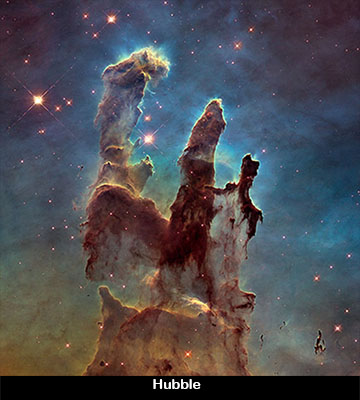
Approximately 5,700 light years away in the constellation Serpens, the Eagle Nebula has several regions of star formation, the most well-known being the one at its centre made famous by a Hubble Space Telescope
image published in 1995. These columns of dust and hydrogen gas contain many dense globules where stars are being actively created and so they became known as The Pillars of Creation.
The pillars are about 4 light years tall, or roughly the same as the distance from our sun to the next nearest star.
The two images below compare a slightly rotated crop of just the central part of the main image with the one from Hubble, showing just how much greater imaging quality there is from the space telescope, with its 2.4m mirror sitting outside the earth’s atmosphere.
The iconic Hubble image was produced by Jeff Hester and Paul Scowen from Arizona State University and was the first to use the Hubble palette
of colours. This assigned the red, green and blue colour channels
to images of spectral emissions in the sulphur, hydrogen and oxygen bands respectively. Although this does not reflect their actual colours, it enabled far more of the nebula's composition to be seen,
whilst also making the image more appealing. The next main image (click the right arrow to view) shows the nebula with separate emissions assigned to their actual colours.
The downside of this is that everything is swamped by the red hydrogen data.

M16 Eagle Nebula (in natural colours)
Date: 25/7/25, 10 & 16/8/25
Subframes:
10 x 600s with Hα/Oiii filter
10 x 600s with Sii filter
14 x 60s normal
Total: 314 minutes
This uses the same raw data as the previous image but has been produced with a more accurate colour assignment. Hydrogen alpha (Hα) emissions are red, sulphur (Sii) a slightly different shade of red, and oxygen (Oiii) is blue/green.
IC1805 Heart Nebula
Date: 17/11/25
Subframes:
12 x 600s with Hα/Oiii filter
60 x 60s normal
Total: 300 minutes
The Heart Nebula is 7,500 lightyears away in the constellation Cassiopea, to the left of the W shaped formation of stars that make up the constellation (if viewing the W shape the right way up).
This emission nebula contains clouds of gas (mostly hydrogen and oxygen) that have been ionised by radiation from the open cluster of stars at its centre. The cluster is known as "Melotte 15," and some of its brightest stars are 50 times the mass of the Sun. The bright feature near the bottom right corner of the image is separately known as "NGC 896," or "The Fish Head Nebula."
The heart-shaped section is around 300 light years across and its apparent width in the sky is about 2°, or 4 times the diameter of the moon.
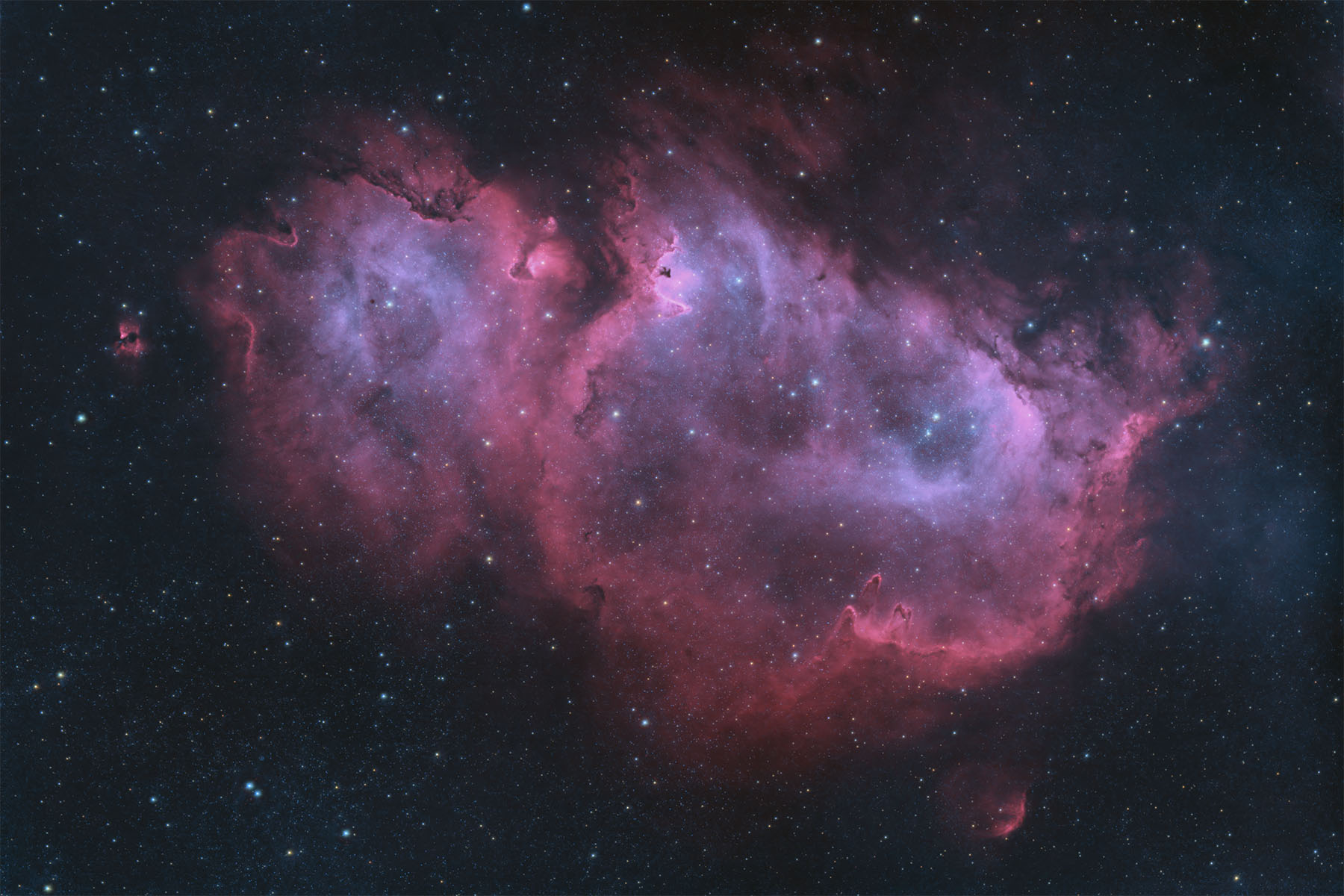
IC1848 Soul Nebula
Date: 11 & 14/03/26
Subframes:
30 x 600s with Hα/Oiii filter
60 x 60s normal
Total: 660 minutes
The Soul Nebula appears next to the Heart Nebula (IC1805 - see previous image) in the constellation Cassiopea. Like its neighbour, it is approximately 7,500 light-years away and about 300 light-years wide.
This is another emission nebula containing bubbles of gas and dust that have been formed by intense stellar winds and radiation from massive stars. The dust can be seen particularly around the edges, giving the clouds their intricate and complex shape. In some areas the clouds are pushed into huge pillars, resulting in new star formation.
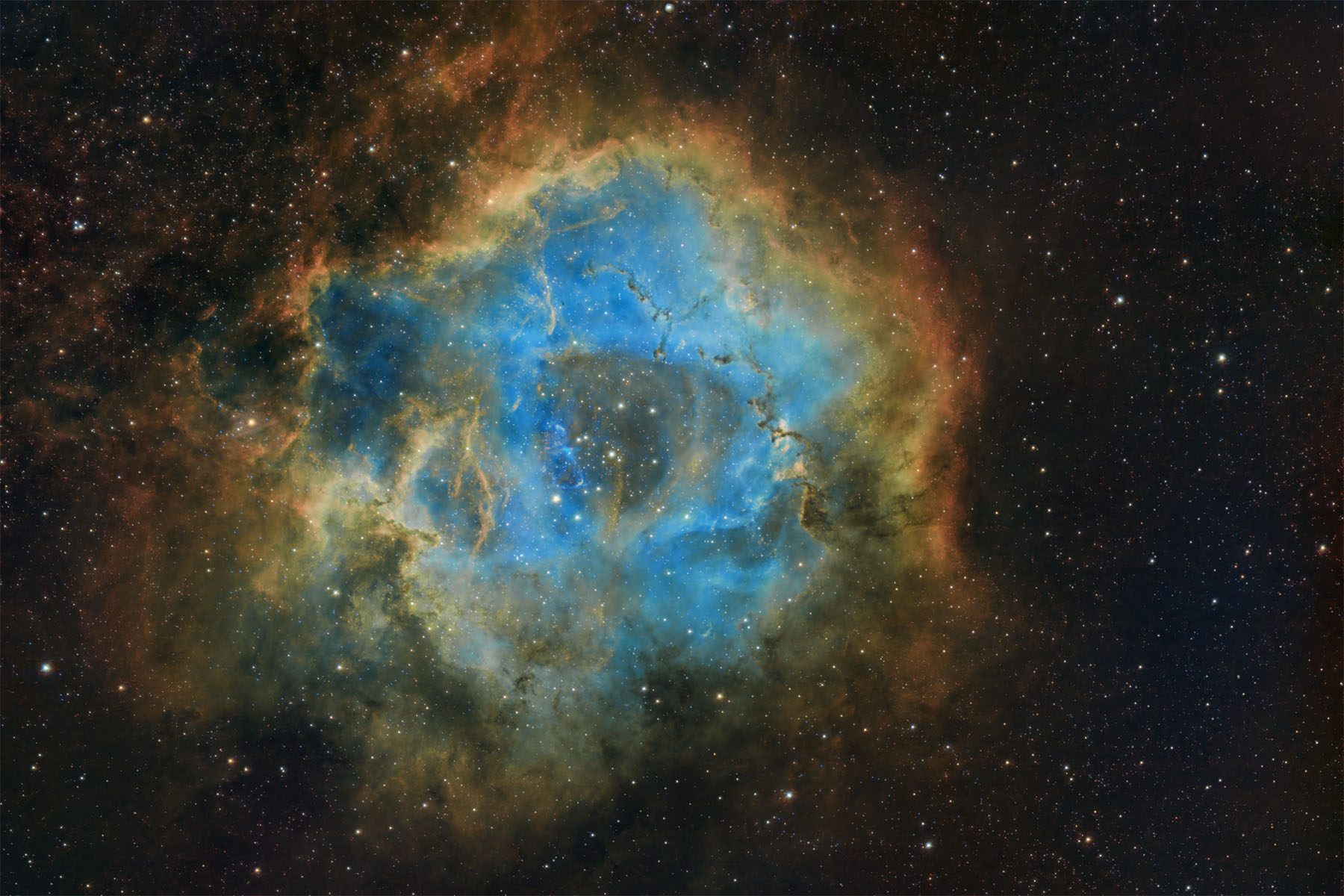
NGC2237 Rosette Nebula
Date: 18 & 21/03/26
Subframes:
12 x 600s with Hα/Oiii filter
12 x 600s with Sii filter
15 x 60s normal
Total: 375 minutes
The Rosette Nebula is a large emission nebula about 130 light years in diameter and 5,000 light years away in Monoceros, a faint constellation to the left of Orion. An “Open cluster” (a group of stars all formed around the same time from a single molecular cloud) at the centre of the nebula contains approximately 2,500 young hot massive stars. Stellar winds from these stars have made a vast hole in the gas cloud, creating a doughnut shape. Their intense radiation is also responsible for the glow from the nebula, seen here particularly in the Hydrogen Alpha (Hα), Oxygen-3 (Oiii) and Sulphur-2 (Sii) spectra.
This image uses the SHO scheme or “Hubble palette” (see M16 Eagle Nebula - Hubble palette image for an explanation), which is particularly good at showing all the detail of these spectral emissions.
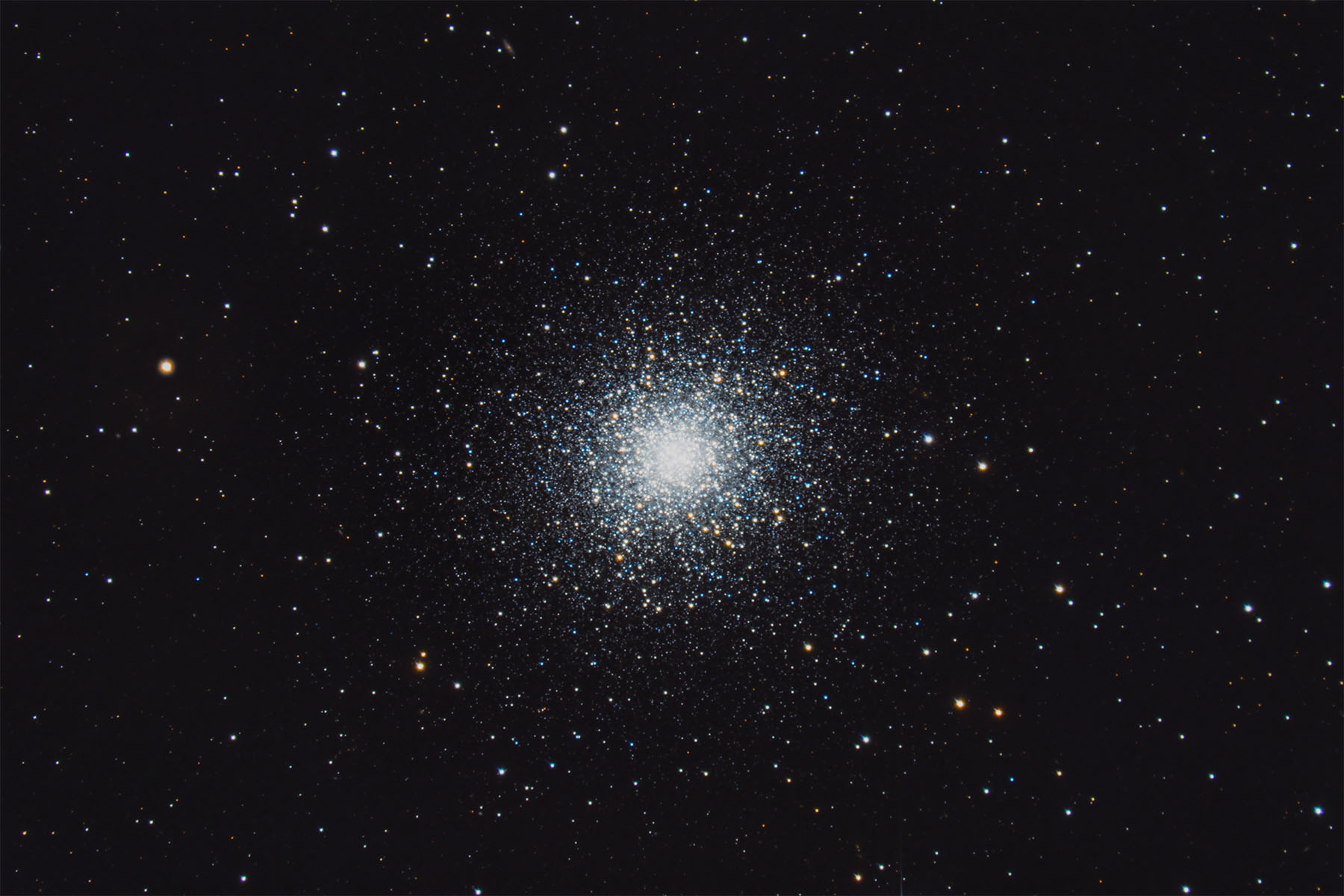
M13 Hercules Globular Cluster
Date: 17 & 19/5/25
Subframes: 25 x 300s
Total: 125 minutes
Globular clusters are thought to be among the oldest objects in the universe and the Hercules Globular Cluster is one of the brightest star clusters visible in the northern hemisphere, containing well over 100,000 and maybe even up to 1 million stars. First recorded by Edmond Halley (who also discovered Halley’s comet) in 1714, it is 145 light years in diameter and 25,000 light years away in the constellation Hercules.
Near the core of this cluster, the density of stars is about a hundred times greater than in the vicinity of our sun. Being so crowded the stars can sometimes collide, and even form new stars, called blue stragglers
because they are brighter and bluer than normally expected.
Saturn
Date: 26/8/23
Subframes: 20,000 x 15ms frames from a 5min video
This was taken a day before Saturn reached opposition1, when it was about 1.46 billion km (907 million miles) from Earth. The Cassini Division can be clearly seen in the centre of the rings, and although fuzzy, some of the planet's gas cloud colours. It is accompanied here by two of its moons, Tethys to the right, and Enceladus to the left.
With a diamater around 120,000km, Saturn is about 9 times the size of Earth and the second largest planet in the solar system. It is composed of metallic hydrogen around a rocky core, a liquid hydrogen and helium layer, with a gaseous hydrogen and helium outer layer.
The planet's rings are mostly particles of ice ranging in size from small granules to several metres. Their thickness is mostly only a few tens of metres, and as little as 9 metres in places, as measured by the Cassini-Huygens probe in 2013, though some vertical structures are up to 3km. There are a several gaps in the ring system, the largest being the Cassini division at 4,700km wide.
Saturn has 8 major moons, but is known to have at least 274 moons in total, and more are constantly being discovered. However, most of these are either very small, distant, have irregular orbits, or are so called
Trojan moons,
which are captives of other moons.
Tethys is the 5th largest moon, with a diameter of 1060km, and Enceladus is about 500km. Enceladus is covered by thick fresh snow and near its south pole has plumes containing various materials, including water, venting away from the planet. These were discovered by the Cassini-Huygens probe in 2005.
1 When a planet is at opposition, the earth is between the sun and the planet, so the three objects are in a straight line. This is when the planet is closest to us and therefore appears brightest and largest.
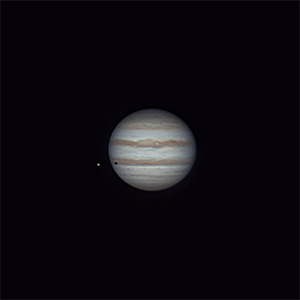
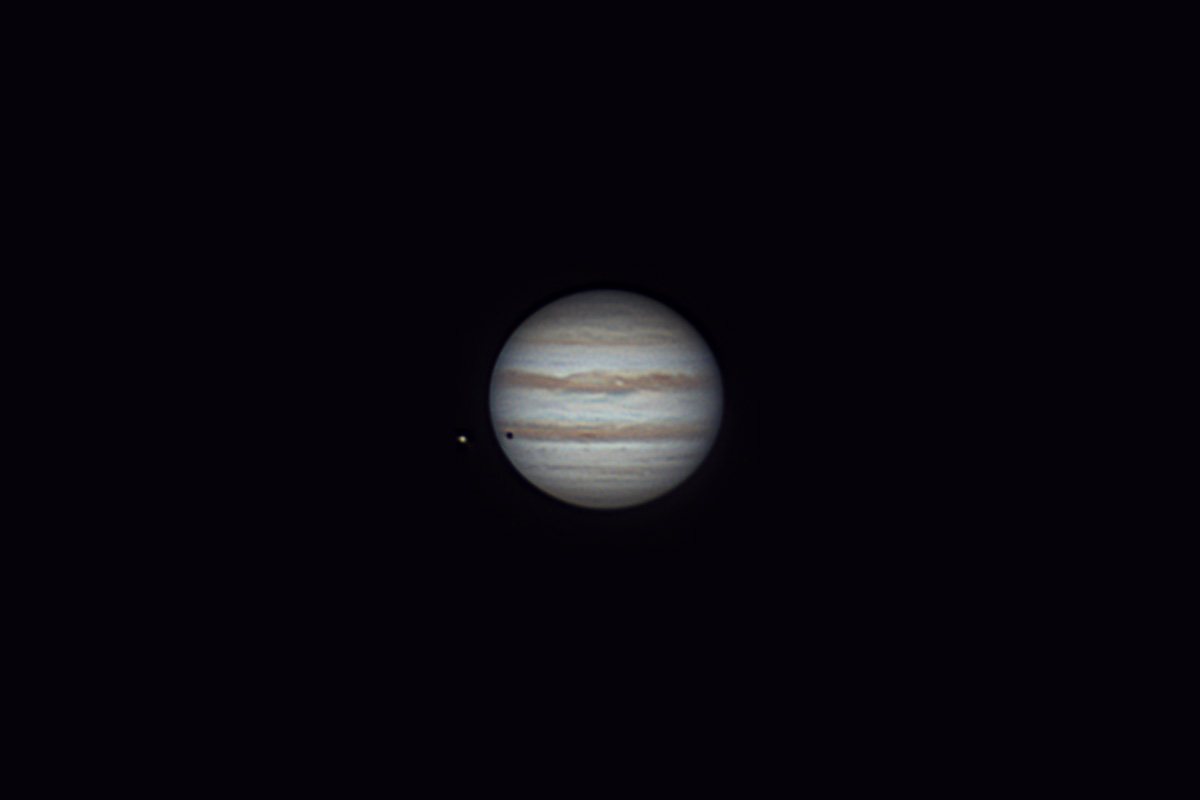
Jupiter and Io
Date: 14/10/23
Subframes: Total of 9,233 x 2.5ms frames from 3 x 1min videos
This was taken 11 days before Jupiter reached opposition1, when it was 743 million km away (462 milion miles). The moon Io can be seen to the left, casting its shadow on the planet cloud tops.
Jupiter is the largest planet in the solar system and about 11 times the diameter of Earth at around 143,000km. In fact, 1,000 Earths would fit inside it. It is 318 times the earth’s mass and made up of mainly hydrogen and helium in different states, from fluid metallic hydrogen around a denser core to liquid and gas outer layers.
One problem with imaging Jupiter is that it rotates quite quickly. With a 10-hour day, the surface features visibly change over the space of a few minutes. A separate stacked image was created from each of the 3 sets of frames, and these were combined using derotation software to correct the movement of the planet between each video.
1 When a planet is at opposition, the earth is between the sun and the planet, so the three objects are in a straight line. This is when the planet is closest to us and therefore appears brightest and largest.
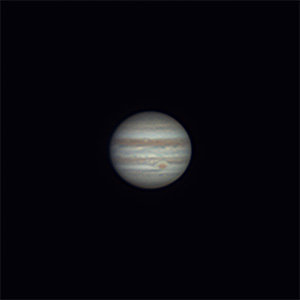
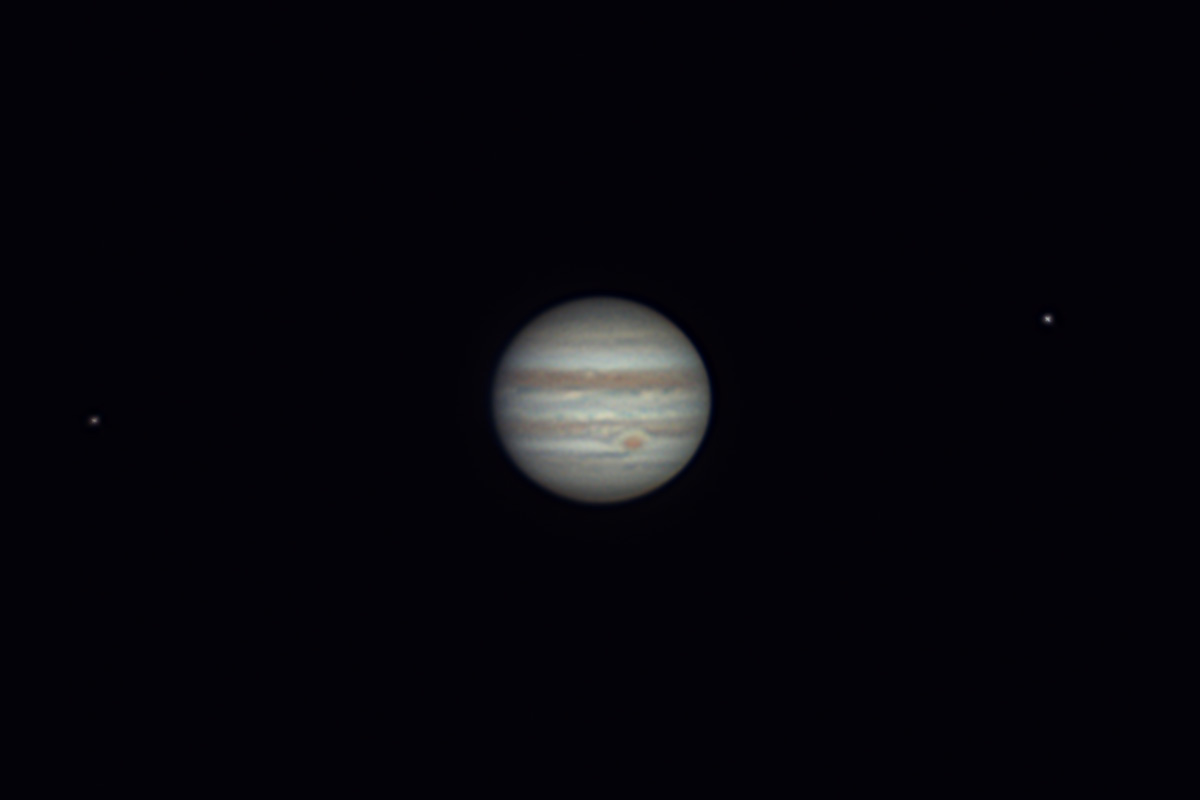
Jupiter with Great Red Spot
Date: 9/1/25
Subframes: Total of 6,063 x 5ms frames from 3 x 1min videos
This view of Jupiter, accompanied by moons Io (left) and Ganymede (right) is at the same scale as the previous Jupiter image. However, this time it was around 5 weeks after the planet's closest point to Earth, and therefore it appears a little smaller.
The Great Red Spot is a very well-known and highly visible feature that can be clearly seen here on the right-hand side just below the planet's South Equatorial Belt. It was first illustrated in 1831 and has been observed continuously since the late 1800s when it appeared to have been around 40,000km across but it is now only 14,000km (still a little bigger than Earth) and shrinking. Previously thought to have been a lot older, the latest research suggests this storm has been raging for around 190 years.
Jupiter has 95 moons that have been recognised so far. The largest and most visible of these are the 4 Galilean moons, discovered in 1609/10 by Galileo using a telescope he had made himself. They are (from largest to smallest): Ganymede, Callisto, Io and Europa.
Io is Jupiter's closest moon, and just a little larger than our own. Intense tidal heating from its massive mother planet makes it the most volcanically active body in the solar system, complete with plumes and lava flows from over 400 active volcanoes. It also has many mountains with some peaks higher than the Himalayas.
Ganymede is the largest moon in the solar system with a diameter of 5,262km, and therefore larger than the planet Mercury.
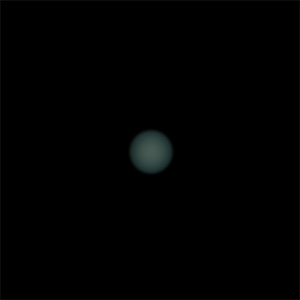
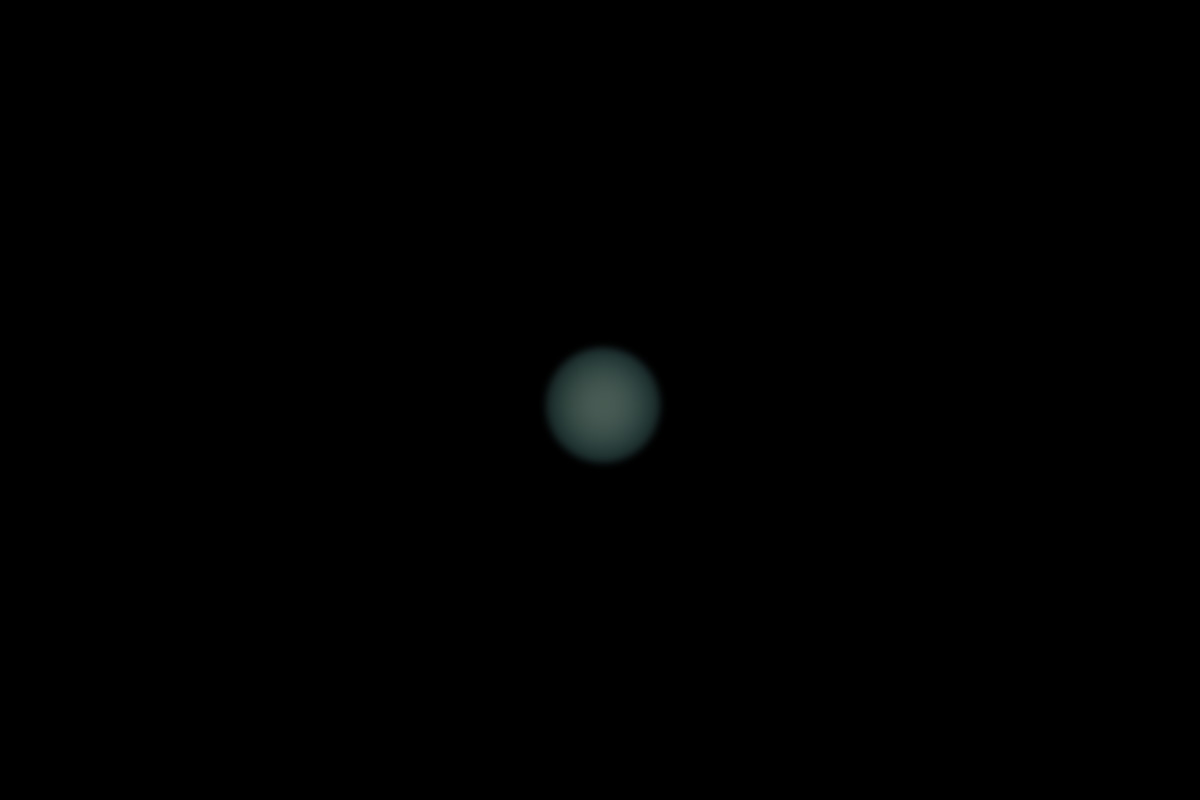
Uranus
Date: 11/11/24
Subframes: Best 5000 x 100ms frames from 15min of video
Uranus is approximately 2.9 billion km or 1.8 billion miles from Earth, which is about twice as far as Saturn and four times further than Jupiter. With a diameter of about 51,000km, it is the third largest planet in the solar system, 4 times the diameter of Earth, but still dwarfed by Jupiter and Saturn.
The planet is made up mostly of an icy mantle of water, methane and ammonia around a rocky core, the methane giving it a blue/green colour, but it has an atmosphere of hydrogen and helium. It is also the coldest planet in the solar system with a temperature in the clouds of -224°C. Although Neptune is further from the sun, Uranus radiates far less heat, possibly having lost this from its core at some time in the past.
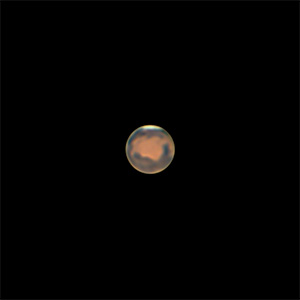
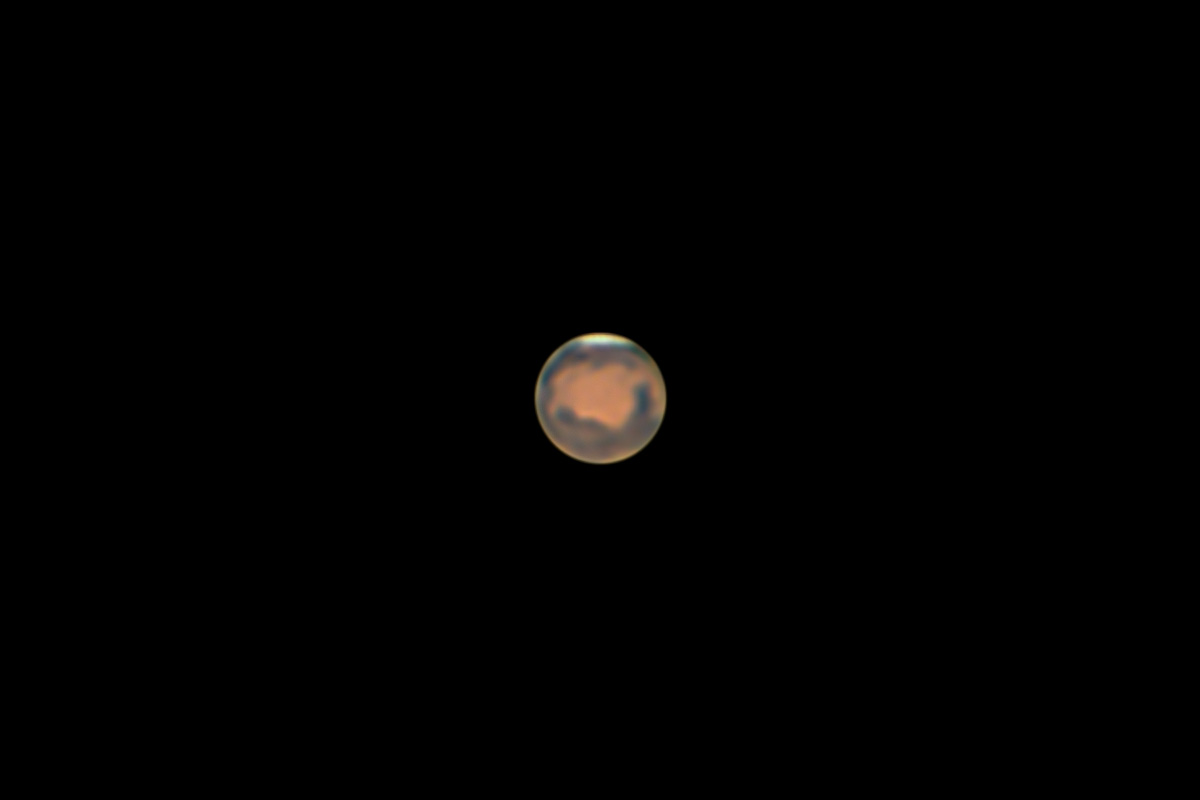
Mars
Date: 9/1/25
Subframes: Best 46,930 x 3ms frames from 3 x 5min videos
Mars is approximately half the size of Earth, and at its closest, about 56 million km away (35 million miles). Taken 1 week before opposition1, this image shows why it is called the Red Planet. Even with the naked eye, it has a reddish appearance compared to other objects in the night sky. The orange/red areas are caused by a covering of iron oxide dust, whereas the darker areas are uncovered basalt produced by ancient volcanic activity.
The prominent feature to the right, stretching northwards from the rest of the dark material to the south, is an area known as Syrtis Major Planum, an extinct shield volcano. It was the first ever documented feature on another planet, appearing in a drawing made by the Dutch scientist Christiaan Huygens in 1659.
The northern polar cap is also clearly visible, containing ice made mostly from water with a little carbon dioxide.
1 When a planet is at opposition, the earth is between the sun and the planet, so the three objects are in a straight line. This is when the planet is closest to us and therefore appears brightest and largest.
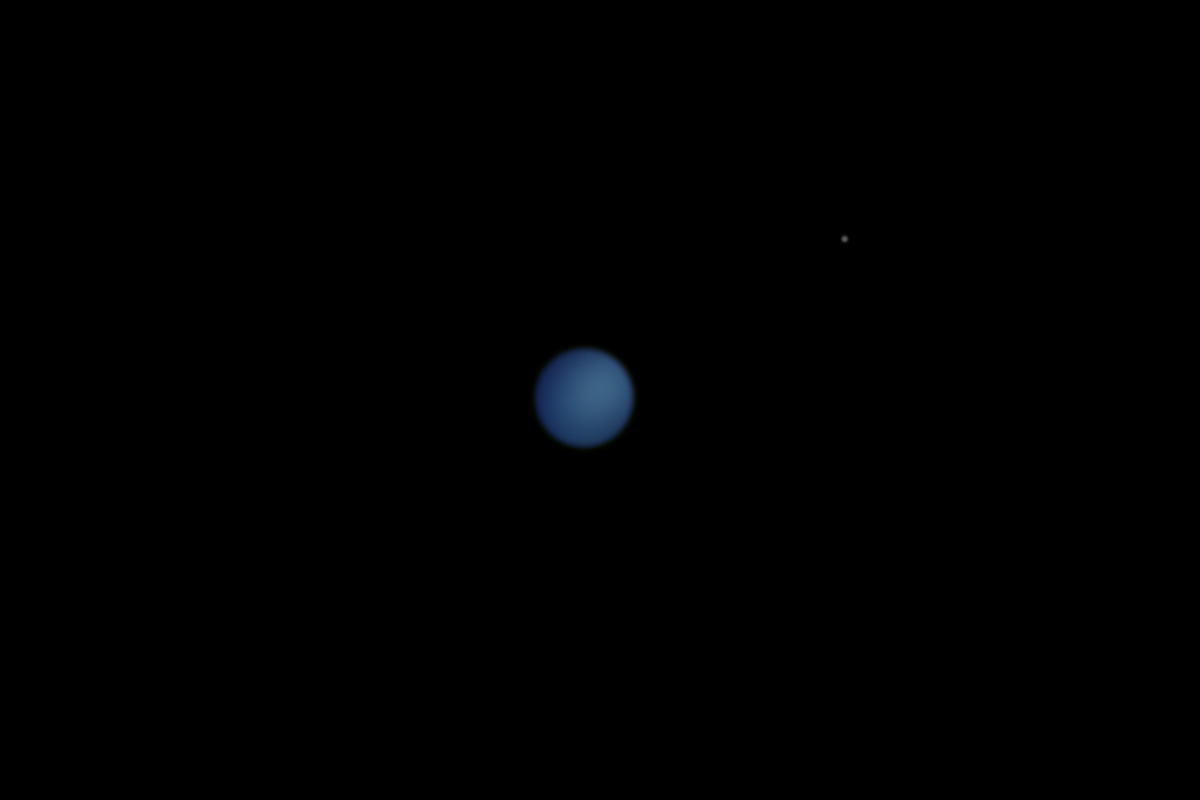
Neptune and Triton
Date: 22/9/25
Subframes: Best 2,400 x 100ms frames from 10min of video
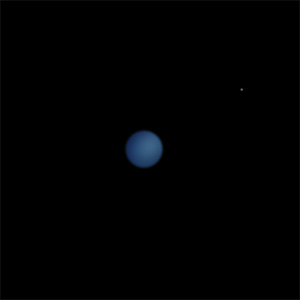
Neptune is the most distant planet in our solar system and around 4.3 billion km (2.7 billion miles) from Earth at its closest, or about 50% further than Uranus. Its diameter of approx. 50,000 km is 3.8 times the diameter of Earth, and a little smaller than Uranus, but it is denser and more massive. At 17 times the mass of earth, only Jupiter and Saturn have greater mass.
Neptune’s core is probably composed of iron and nickel, and much like Uranus, its mantle is mostly water, methane and ammonia. The atmosphere is hydrogen and helium with a trace of methane, which again like Uranus, gives the planet its colour. Neptune is slightly bluer than Uranus as there is less haze present to obscure it, but clouds and even storm systems can sometimes be detected.
Triton (above and to the right of the planet) is the largest of Neptune's 13 moons with a diameter of around 2,700km, and the only large moon in our solar system that orbits in the opposite direction to its planet's rotation (known as a retrograde
orbit).
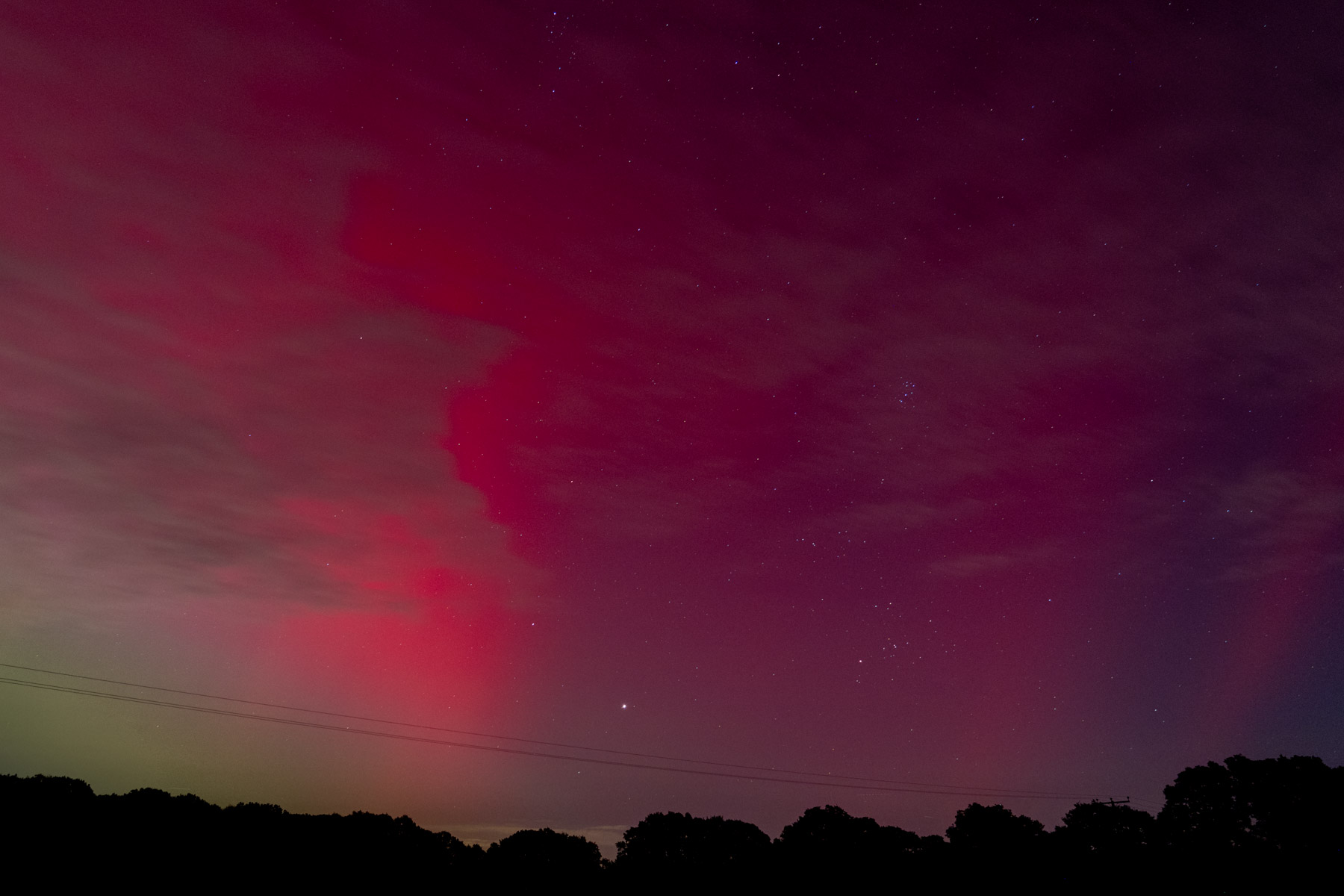
Jupiter rising behind the aurora
Date: 10/10/24
Exposure: 13s at f4, ISO 3200
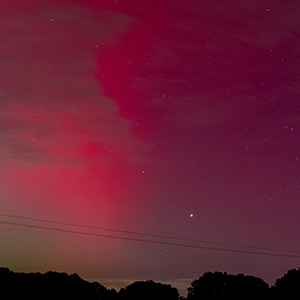
A very rare occurrence of the Aurora Borealis (or Northern Lights) this far south. Shafts of light can be seen illuminating the clouds, and Jupiter has just risen.
Taken with a conventional camera and wide-angle lens.
Milky Way from Bignor Hill
Date: 11/08/26
Subframes: 20 x 60s at f2.5, ISO 800
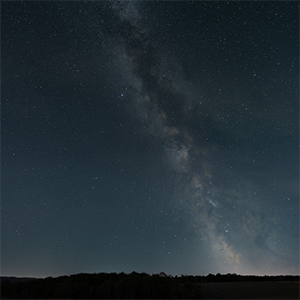
This was captured at Bignor Hill in West Sussex, one of the designated Dark Sky Discovery sites in the South Downs National Park.
Our Milky Way galaxy is around 100,000 light years in diameter and contains maybe a few hundred billion stars. The solar system is about halfway out from the centre in the Orion Spur, a minor link between the more significant Sagittarius and Perseus spiral arms. The Sagittarius arm is nearer the centre and Perseus towards the outside. In the northern hemisphere, only when we look at the Milky Way in summer, are we looking inwards towards the Sagittarius Arm and the galactic core, which is when we see this sight.
The bright bands which were almost vertical at the time of this image are caused by the light of billions of stars. These are too far away and too densely packed together to see individually, especially as we are seeing stars at many different distances overlaid in the same line of sight. The dark lane between them (the Great Rift) is not a lack of stars, but it consists of dense clouds of dust and gas that are hiding some of the brightest areas of the galaxy.
Right at the actual location of the galactic centre is Sagittarius A, a super massive black hole, and it is thought that all large galaxies have this feature. In the image, Sagittarius A is about a third of the way between the brightest visible part of the core (just above the ground) and the rear of the Dark Horse nebula (that's the horse-like shape that appears to be rearing up in the bottom right-hand corner). In August, the core area and the horse disappear after an hour of astronomical darkness at this location (around 51° north), and even sooner at other times, making it quite hard to image.
The next image is a cropped landscape format version of this one, showing the lower section only, and illustrating the main core areas in a slightly higher resolution.
Milky Way from Bignor Hill (crop)
Date: 11/08/26
Subframes: 20 x 60s at f2.5, ISO 800
This is simply a landscape crop of the bottom part of the previous (portrait) image. Apart from fitting better on landscape screens, it has not been downsized quite as much from the original master. This allows the core areas of the Milky Way to be shown in slightly higher resolution.
Galaxies >
M31 Andromeda Galaxy
M81 Bode's Galaxy & M82 Cigar Galaxy
M51 Whirlpool Galaxy
M101 Pinwheel Galaxy
M104 Sombrero Galaxy
Nebulae >
M42 Orion Nebula
B33 Horsehead & NGC2024 Flame Nebulae
NGC6960 Western Veil Nebula (Witch's Broom)
NGC7293 Helix Nebula (Eye of God)
M1 Crab Nebula
M16 Eagle Nebula (in Hubble palette)
M16 Eagle Nebula (in natural colours)
IC1805 Heart Nebula
IC1848 Soul Nebula
NGC2237 Rosette Nebula
Star Clusters >
M13 Hercules Globular Cluster
Solar System >
Saturn
Jupiter and Io
Jupiter with Great Red Spot
Uranus
Mars
Neptune and Triton
Other >
Jupiter rising behind the aurora
Milky Way from Bignor Hill
Milky Way from Bignor Hill (crop)